

FITC-PEG-GO纳米片在多种哺乳动物细胞中的内吞机制研究
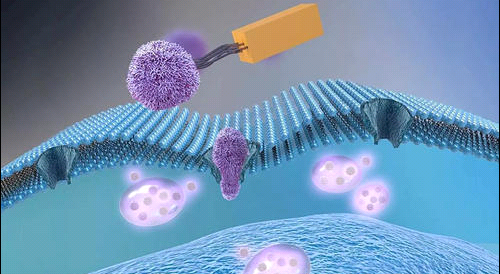
论文:Endocytic Mechanisms of Graphene Oxide Nanosheets in Osteoblasts, Hepatocytes and Macrophages小编:Javier Linares†M. Concepción Matesanz†Mercedes Vila‡§⊥M. José Feito†Gil Gonçalves⊥María Vallet-Reg퇧Paula A. A. P. Marques⊥M. Teresa Portolés文献综述联结: 内容提要:Nano-graphene oxide (GO) has attracted great interest in nanomedicine due to its own intrinsic properties and its possible biomedical applications such as drug delivery, tissue engineering and hyperthermia cancer therapy. However, the toxicity of GO nanosheets is not yet well-known and it is necessary to understand its entry mechanisms into mammalian cells in order to avoid cell damage and human toxicity. In the present study, the cellular uptake of pegylated GO nanosheets of ca. 100 nm labeled with fluorescein isothiocyanate (FITC-PEG-GOs) has been evaluated in the presence of eight inhibitors (colchicine, wortmannin, amiloride, cytochalasin B, cytochalasin D, genistein, phenylarsine oxide and chlorpromazine) that specifically affect different endocytosis mechanisms. Three cell types were chosen for this study: human Saos-2 osteoblasts, human HepG2 hepatocytes and murine RAW-264.7 macrophages. The results show that different mechanisms take part in FITC-PEG-GOs uptake, depending on the characteristics of each cell type. However, macropinocytosis seems to be a general internalization process in the three cell lines analyzed. Besides macropinocytosis, FITC-PEG-GOs can enter through pathways dependent on microtubules in Saos-2 osteoblasts, and through clathrin-dependent mechanisms in HepG2 hepatocytes and RAW-264.7 macrophages. HepG2 cells can also phagocytize FITC-PEG-GOs. These findings help to understand the interactions at the interface of GO nanosheets and mammalian cells and must be considered in further studies focused on their use for biomedical applications.
 pg电子娱乐游戏app
微信公众号
pg电子娱乐游戏app
微信公众号 官方微信
官方微信